| Therapeutisches Mittel gegen Eierstockkrebs |
Brust- und Eierstockkrebs ist ein ernstes Problem der öffentlichen Gesundheit, das eine große Bedrohung für Frauen darstellt. In den letzten Jahren, Die steigende Rate der Brustkrebsinzidenz in China war gleichmäßig 1-2% höher als in Ländern mit hoher Inzidenz. Andererseits, Eierstockkrebs stellt immer noch die größte Herausforderung für gynäkologische Onkologen dar, da derzeit kein ausgereifter Ansatz für die Diagnose im Frühstadium verfügbar ist. Nach der Diagnose, etwa 70% Die Fälle befinden sich im fortgeschrittenen Stadium. Sogar eine wirksame Behandlung durchführen und eine vollständige Linderung erreichen, gibt es noch 70% der Patienten, bei denen ein Rezidivproblem auftritt, wobei die 5-Jahres-Überlebensrate ungefähr schwankt 30-40%. Deshalb, Menschen sind Versuche, die dreistufigen Präventions- und Kontrollmaßnahmen für Eierstockkrebs wie für andere chronische Krankheiten zu etablieren.
Es besteht ein dringender Bedarf an einem neuen Medikament zur Behandlung von Eierstockkrebs, da die platinbasierte Chemotherapie nur eine begrenzte Wirkdauer hat, bevor unerträgliche Nebenwirkungen auftreten. Flapberry, zusammen mit anderen PARP-Inhibitoren in der Entwicklung handelt es sich um orale Präparate, die im Vergleich zu den Medikamenten, die in der konventionellen Chemotherapie eingesetzt werden, besser verträglich sind und längerfristig angewendet werden können. Olaparib kann ein Enzym hemmen, das an der Zellreparatur beteiligt ist, und ist für Patienten mit bestimmten genetischen Mutationen geeignet. Auch bei der Behandlung anderer Krebsarten hat das Medikament gute Aussichten, Dies eröffnet erhebliche Marktchancen für Olaparib.
Im Dezember 19, 2014, Die FDA hat das neuartige Krebsmedikament Olaparib zugelassen (Lynparza) zur Monotherapie für Patienten mit fortgeschrittenem Eierstockkrebs, die sich mindestens einer Behandlung unterzogen haben 3 Chemotherapierunden oder Patienten mit Verdacht auf BRCA-Mutationen. Gleichzeitig, Die FDA hat die Quantifizierung und Klassifizierung von Diagnosekits zum Nachweis von Mutationen in BRCA1 und BRCA2 genehmigt, BRACAnalysis CDx. Flapberry (Lynparza) ist das erste PARP-Inhibitor-Medikament, das von der FDA zugelassen wurde.
Im Februar 2, 2015, die Lebensmittel- und Arzneimittelbehörde der Europäischen Union (EMA) Olaparib wurde außerdem für die Markteinführung zugelassen 28 Länder der Europäischen Union einschließlich Island, Liechtenstein und Norwegen. Die Angaben zur EMA- und FDA-Zulassung unterscheiden sich jedoch geringfügig; Ersteres gilt für Fälle von BRCA-Genmutationen, und auch für die Erhaltungstherapie bei Patienten mit fortgeschrittenem epithelialem Eierstockkrebs, die zuvor platinhaltige Chemotherapeutika erhalten haben, darauf ansprechen und zu einem erneuten Auftreten neigen. |
| Pharmakologische Wirkungen |
Olaparib ist eine Art neuartige Poly-ADP-Ribose-Polymerase (PARP) Inhibitoren, einschließlich PARP1, PARP2, und ARP3. PARP vermittelt einen DNA-Reparaturmechanismus, der eine wichtige Rolle bei der Reparatur von DNA-Schäden und der Apoptose spielt, Olaparib zielt also gezielt auf den DNA-Reparaturmechanismus der Zielzelle ab und entfaltet seine Wirkung, indem es die kritischen Schwachstellen von Krebszellen angreift, die Mutationen in BRCA1 und BRCA2 tragen. Aufgrund dieses Mechanismus, Es kann zur Erhaltungstherapie von Patientinnen mit schwerem rezidivierendem Eierstockkrebs eingesetzt werden, die über ein Brustkrebs-Anfälligkeitsgen verfügen (BRCA) Mutation sowie eine Empfindlichkeit gegenüber dem Platinmedikament.
Wissenschaftler des Dana-Farber Cancer Institute der Harvard Medical School haben herausgefunden, dass die Zielstelle von Olaparib die Polymerase Q ist (POLQ, auch bekannt als POLθ). Those scientists found that a large number of patients of ovarian cancer has the genetic deficiency in the homologous recombination (homologous recombination, HR) repair pathway and dramatic up-regulated expression of POLQ greatly. Since HR is an important repair pathway for repairing broken DNA, they speculated that the major function of POLQ is to compensate for the lack of HR and participate in DNA repair.
The experiment has demonstrated that, in normal HR cells, knockout of POLQ would make HR activity increase significantly; while in HR deficient cells, the knockout of POLQ leads to cell death. POLQ contains RAD51 binding domain which can block the process of RAD51-mediated DNA repair. Related research has been published in the February 12, 2015 journal with Raphael Ceccaldi being the first author of this research.
Studies have revealed that about 10% of ovarian cancer patients and 5% of breast cancer patients contain BRCA1 or BRCA2 mutations. Both BRCA1 and BRCA2 belong to tumor suppressor genes as the major components of HR repair pathway. Their mutation suggests the loss of function for the HR repair pathway. In the cancer model of BRCA1 or BRCA2 mutations, blocking the important component for repairing single-strand DNA breaks–PARP can kill the mutated cancer cells. Put the BRCA-deficient mice with POLQ deficient mice for hybridization will cause the death of mouse embryos shortly after birth, which means that the coexistence of two repair pathway deficiency will cause embryonic lethality.
These above findings suggest that olaparib, a kind of novel oral PARP inhibitor which is able to kill BRCA deficient cells, may be the effective drug for treating cancer patients who carry such mutations. Vorher, researcher’s knowledge of the BRCA mutation hasn’t influenced patients’ choice of treatment on either ovarian cancer or breast cancer. jedoch, after the study, which means that olaparib can be used for the targeted therapy of cancer patients who carries BRCA1 or BRCA2 gene mutations with the therapeutic target site being the genetic deficiency of cancer cell genetic defect rather than a target organ.
In ovarian and breast cancer cells, BRCA mutations are the first heavy blow to the survivability of cell because it increases their susceptibility to DNA damage. Through targeting the PARP-controlled adjuvant repair pathways, olaparib and its similar drugs achieve the second heavy blow to the survivability of cell. With the disorders of both of the two repairmen signaling pathways, the accumulation of DNA damage exert the third heavy blow to the cells. |
| Pharmakokinetik |
Absorption
After the oral administration of olaparib through its capsule preparation, it is quickly absorbed with the plasma concentration typically reaching peak at 1-3 hour period after the administration. Multiple rounds of administration cause no significant savings (savings ratio 1.4-1.5 mit 2 Mal pro Tag) with achieving steady-state exposure within 3 zu 4 Tage.
Limited information suggest that, in dose across the range of 100 zu 400 mg, the increase of whole body exposure (AUC) olaparib is less than direct proportion but the PK data across the test is variable.
The co-administration of a high-fat meal causes a lower absorption rate (Tmax is delayed by 2 Std), but doesn’t significantly alter the extent of absorption of olaparib (mean AUC increased by about 20%).
Verteilung
After the administration of a single dose of 400 mg olaparib, the steady-state olaparib has a mean (±SD) apparent volume of distribution of 167 ± 196 L. After the achievement of the plasma concentrations at the dose of 400mg twice daily, the in vitro protein binding rate of olaparib is approximately 82%.
Stoffwechsel
In vitro, CYP3A4 has been shown to be primary enzymes responsible for metabolism of olaparib.
After oral administration of 14C-olaparib to female patients, unchanged olaparib accounts for the majority (70%) of the circulating radioactivity in the plasma.
It is extensively metabolized in the urine and feces with the radioactivity of drug remained unchanged accounting for 15% und 6%, beziehungsweise. The biggest part of metabolism attributes to the oxidation and the derived components which subsequently bind with glucuronide or sulfate.
Ausscheidung
After the administration of a single dose of 400 mg olaparib, it was observed of a mean (± standard deviation) terminal plasma half-life being 11.9 ± 4.8 in hours and the apparent plasma clearance being 8.6 ± 7.1L/h.
After a single dose of 14C-olaparib, during the seven days of collection, 86% of the administered radioactivity was recovered with 44% going through urine and 42% going through feces. Most of the material is excreted as metabolites.
According to the preliminary data of special efforts from renal impairment test, when olaparib is administrated by patients of mild renal impairment (CLcr = 50-80 mL/min; N = 14) and compared to patients with normal renal function (CLcr> 80 mL/min; N = 8), the mean AUC and Cmax of olaparib were increased by 1.5 und 1.2 mal, beziehungsweise. There are no data available for the patients with CLcr <50 mL/min or patients subjecting to dialysis. |
| Wechselwirkungen mit Arzneimitteln |
In vitro, olaparib is a inhibitor of the CYP3S4 but the inducing agent of CYP2B6 upon the higher concentration achieved clinically. Olaparib has small or no inhibitory effects on other CYP isozymes. In vitro studies have ever shown that olaparib is the substrate of CYP3A4.
According from a set of Drug-interaction test data (N = 57), when olaparib is administrated with itraconazole, a potent CYP3A inhibitor, in combination, the AUC and Cmax of olaparib were increased by 2.7-and 1.4-fold, beziehungsweise. The stimulation based on the physiologically pharmacokinetic (PBPK) model suggests a moderate inhibitor of CYP3A (fluconazole) can increase the AUC and Cmax of olaparib, beziehungsweise, by 2-and 1.1-fold.
According a set of Drug-interaction test data (N = 22), when olaparib is administrated with rifampicin, a potent CYP3A inducer, in combination, the AUC and Cmax of olaparib were reduced by 87% und 71 %, beziehungsweise. Stimulation based on PBPK model suggests one kind of moderate CYP3A inducers (efavirenz) may reduce the AUC and Cmax of olaparib by 50-60% und 20-30%, beziehungsweise.
In vitro studies have ever shown that olaparib is the substrate of P-gp and the inhibitors of BCRP, OATP1B1, OCT1, OCT2, OAT3, MATE1 and MATE2K. It is still not clear about the clinical relevance of these findings.
Die oben genannten Informationen werden vom Chemicalbook von Dai Xiongfeng herausgegeben. |
| Nebenwirkungen |
1. The most common adverse reaction in clinical trials≥20%) include anemia, Brechreiz, Ermüdung (including lack in strength), Erbrechen, Durchfall, taste disturbance, Verdauungsstörungen, Kopfschmerzen, Appetitverlust, nasopharyngitis/pharyngitis/URI, Husten, arthralgia/musculoskeletal pain, myalgia, Rückenschmerzen, dermatitis/rash and abdominal pain/discomfort.
2. The most common laboratory abnormalities (≥25%) is increased creatinine, increased red blood cell mean volume, reduced hemoglobin, reduced lymphocytes, reduced absolute neutrophil count, and thrombocytopenia. |
| Chemische Eigenschaften |
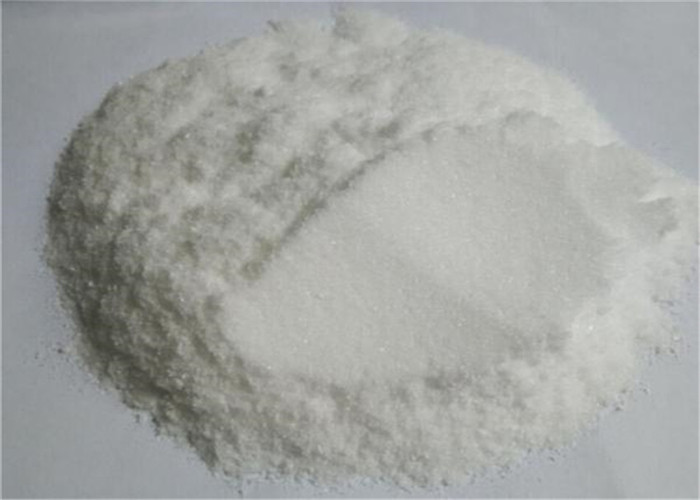
Weißer Feststoff |
| Verwendet |
Olaparib ist ein starkes Poly(ADP-Ribose) Polymerase (PARP) Inhibitor. Es wurde gezeigt, dass Olaparib eine signifikante Abtötung von lymphoiden Tumorzellen von ATM-Mangel in vitro und in vivo induziert. Jüngste Studien zeigen, dass Olaparib die Strahlenempfindlichkeit eines Lungentumor -Xenotransplantats erhöht, Machen Sie es zu einem potenziellen Kandidaten für die Verwendung in Kombination mit Strahlentherapie. |
| Definition |
Chebi: A member of the class of N-acylpiperazines obtained by formal condensation of the carboxy group of 2-fluoro-5-[(4-oxo-3,4-dihydrophthalazin-1-yl)Methyl]benzoic acid with the free amino group of N-(cyclpropylcarbonyl)pi erazine; used to treat advanced ovarian cancer. |
| Verwendet |
Many of the products generated by alkylating agents on DNA can be efficiently repaired by normal base excision repair (BER). Some poly(ADP-Ribose) polymerases (PARPs) assist in the repair of single-strand DNA nicks, an important step in BER. Olaparib is a potent inhibitor of PARP1 and PARP2 (IC50 = 5 und 1 nm, beziehungsweise) but is less effective against the PARP tankyrase-1 (IC50 = 1.5 μM). It can be used in cells and in animals, alone or in combination therapy with alkylating agents, to block BER and increase cancer cell death.[Cayman Chemical] |





 Verkaufsleiter